NASA’s Pandora Mission Begins Study of Exoplanets, Host Stars
Watch to learn more about NASA’s Pandora mission, which will revolutionize the study of exoplanet atmospheres. Video credit: NASA's Goddard Space Flight Center
After launching in January 2026, NASA’s Pandora, a small satellite designed to study exoplanet atmospheres, began scientific observations from its position in low Earth orbit.
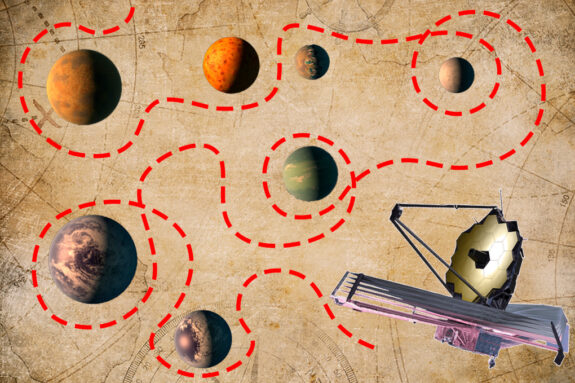
Pandora’s mission is to observe exoplanets that transit in front of their host stars and measure how the molecules in its atmosphere bend the light. By doing so, scientists can determine the chemical fingerprint of the atmosphere. Pandora will help to create a firm foundation for interpreting measurements taken by the James Webb Space Telescope (JWST) and future missions focused on finding habitable worlds.
“Water is one of the most important molecules we can measure to understand the composition and physical conditions of an exoplanet atmosphere,” says Earth, Atmospheric and Planetary Sciences (EAPS) Research Scientist Benjamin Rackham, a team member on the NASA mission. “But features on the star can distort the water signal we’re searching for. Pandora is designed to disentangle the signals from the planet and the star, helping us to understand the planets more accurately and laying the groundwork for the eventual study of planets that could harbor life.”