New study reveals hidden “chemical currency” fueling the ocean’s carbon cycle

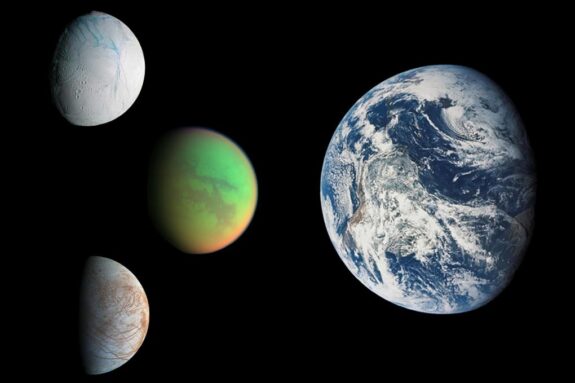
A new study identifies a diverse set of molecules released by marine phytoplankton that fuel microbial life and help drive Earth’s carbon cycle. Image credit: Taylor Crockford/Woods Hole Oceanographic Institution
Marine phytoplankton and other surface ocean microbes play a crucial role in the Earth’s carbon cycle. Scientists have known that they are responsible for moving carbon by taking in carbon dioxide and converting it to organic carbon through photosynthesis, moving billions of tons of carbon through the ocean and atmosphere. But the specific compounds responsible for this have remained a mystery, as it is hard to distinguish them chemically in salt water and they are often consumed by other organisms almost as soon as they are produced.
But a new study, led by Woods Hole Oceanographic Institution (WHOI) and Columbia University and featuring contributions from Rogier Braakman, a research scientist in MIT’s Department of Earth, Atmospheric & Planetary Sciences (EAPS), identifies a diverse set of molecules released by marine phytoplankton that fuel microbial life and help drive Earth’s carbon cycle.
“The breakdown of organic carbon by marine bacteria controls the return of carbon from the ocean to the atmosphere, but the specific molecules driving this process are difficult to predict from genomes alone,” says Braakman. “Our work takes an important step forward by experimentally identifying major compounds released by key phytoplankton, allowing us to study how bacteria use these molecules to regulate the carbon cycle.”
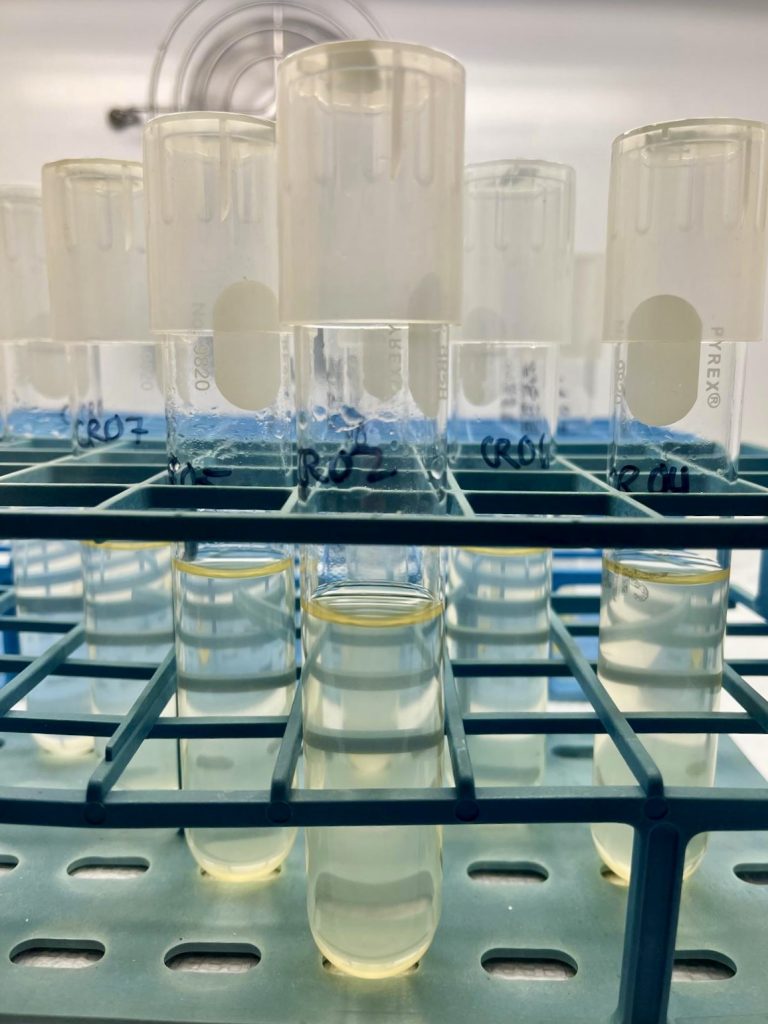
In the study, scientists placed six phytoplankton species under controlled conditions and provided the nutrients and light needed to grow, then used a chemical-tagging method developed at WHOI to quantify the composition of the molecules that were released. They found that these compounds accounted for up to 23% of the dissolved organic carbon that phytoplankton released and may support a substantial share of microbial metabolism in the global ocean.
Many bacteria are metabolic specialists, or picky eaters, and the study found that different phytoplankton species release distinct combinations of metabolites, including carbon compounds also containing nitrogen, phosphorus, and sulfur. Because bacteria vary in which molecules they can consume, the chemical “menu” produced by phytoplankton helps determine which microbial communities thrive in different parts of the ocean.
“The findings help illuminate a long-standing mystery about the composition of the ‘chemical currencies’ that are moved by microbes in the surface ocean,” said Sonya Dyhrman, a co-author of the study and professor of earth and environmental sciences at Columbia University’s Lamont-Doherty Earth Observatory. “I think of it as a microbial carbon economy. By identifying the currencies produced by phytoplankton, scientists can begin to build more realistic representations of how marine microbial communities cycle billions of tons of carbon.”
To explore the broader implications, the team, also including researchers from the Massachusetts Institute of Technology and Marine Biological Laboratory, combined laboratory measurements with global ecosystem modeling. Their results suggest that phytoplankton-derived metabolites could supply up to 5 percent of the daily carbon needs of SAR11, one of the most abundant groups of bacteria in the surface ocean.
“Understanding these exchanges is critical because a huge portion of Earth’s carbon cycle passes through this microbial system, but we still don’t fully understand it,” said the center’s director and co-author of the study, WHOI Senior Scientist Elizabeth Kujawinski. “If we understand what molecules phytoplankton release and what molecules bacteria can take up, we can start building models of how these organisms interact. We think of the surface ocean as a network, where phytoplankton and bacteria are connected by molecules—some compounds feed many different bacteria, while others only support a few.”
Future studies will investigate how environmental conditions such as nutrient limitation, temperature changes, and ocean acidification alter the molecules phytoplankton release and how microbial communities respond to those ‘chemical currencies.’
The research was conducted as part of the National Science Foundation-funded Center for Chemical Currencies of a Microbial Planet, a science and technology center that investigates how small molecules govern interactions among microorganisms across Earth’s ecosystems.

3 Questions: Ryan Woosley on changes in ocean acidity and carbon
September 1, 2025