Susan Solomon named 2026 Tang Prize laureate
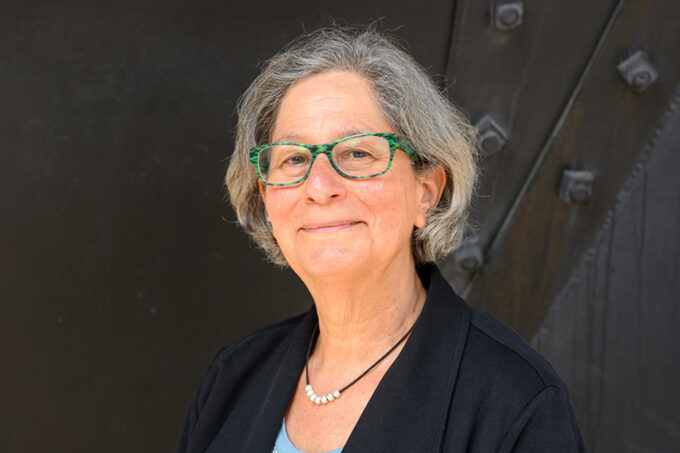
Lee and Geraldine Martin Professor of Environmental Studies Susan Solomon has been named the 2026 Tang Prize in Sustainable Development laureate, in recognition of her research and leadership in atmospheric and climate sciences that has helped shaped global policy.
Susan Solomon, the Lee and Geraldine Martin Professor of Environmental Studies, has been named the 2026 Tang Prize Laureate in Sustainable Development for “groundbreaking advances and leadership in atmospheric and climate sciences that shaped global policy for Sustainable Development,” according to the Tang Prize Foundation.
The Tang Prize is a biennial international award granted by judges convened by Academia Sinica, Taiwan’s top academic research institution, and recognizes four fields of research: sustainable development, biopharmaceutical science, sinology, and rule of law.
“The Tang Prize is one of the most prestigious awards in environmental science and it’s flooring to anyone to learn that they received it,” says Solomon, who holds joint appointments in the departments of Chemistry and Earth, Atmospheric, and Planetary Sciences (EAPS). “It’s a tremendous, tremendous honor, and I’ll try to live up to it.”
Solomon began her career at the National Oceanic and Atmospheric Administration (NOAA). In 1985 scientists discovered an unexpected “hole” in the ozone layer of the atmosphere above Antarctica. Ozone, a gas made of three oxygen atoms, helps filter out ultraviolet radiation from the sun that would otherwise damage living organisms, with impacts such as increasing rates of skin cancer and cataracts. The following year Solomon, then 30, published a paper proposing a novel chemical mechanism that might explain the mysterious hole. In the same year she led a team of 16 scientists to take direct measurements of the degradation of the ozone layer, as the only woman in the expedition. Their findings were the first measurements to show that chlorofluorocarbons (CFCs), compounds used in common items such as aerosols and cooling systems, were indeed destroying ozone in the stratosphere.
“Maybe it’s just being young and naive or maybe it’s being open to new ideas, but at that stage in my life I was open to the idea that chemistry might be completely different from what we had thought. I came up with some ideas of how to explain it that turned out to be right, remarkably,” she says.
The following year, a United Nations conference signed the Montreal Protocol, with all nations agreeing to phase out the use of CFCs and resulting in one of the most successful triumphs of international climate policy to date.
“The ozone story is a fantastic one, because it teaches us that we can actually develop international agreements and get all different kinds of countries, developed and developing, to agree to them and to solve problems together,” she says.
From 2002 to 2008 she co-led the production of the Intergovernmental Panel on Climate Change (IPCC) Fourth Assessment Report, synthesizing climate science knowledge and assessing effects and mitigation approaches to human-caused climate change. It was later recognized with a Nobel Peace Prize.
Solomon then went on to study the impacts of manmade CO2 emissions on the Earth’s climate. Her groundbreaking research showed that human emissions of carbon dioxide were causing impacts on the climate that would be irreversible for 1000 years even after emissions stopped. She joined the EAPS faculty in 2012, where she has continued her work on studying the ozone layer. Recently, she has found the first quantitative proof that the ozone layer is on track to recover by around 2035.
“Most of the awards I’ve gotten previously have been very focused on the science that I did, but this one embraces the fact that my work has benefit for the planet’s sustainability,” she says. “People recognize that my work did something valuable. That is an incredible, humbling, and remarkable feeling.”
“Susan is a model of an engaged scientist,” says David McGee, the William R. Kenan, Jr. Professor of Earth and Planetary Sciences and EAPS Department Head. “From uncovering the mechanisms by which human activities affect the ozone layer, to using that understanding to guide political action, to most recently showing that our actions have produced measurable ozone recovery, her work and leadership have deeply impacted the field and the health of our society. Her mentoring and teaching have similarly impacted students and researchers across EAPS and MIT. This award is a wonderful celebration of her remarkable achievements.”
“Susan is a pioneer of atmospheric chemistry,” says Class of 1942 Professor of Chemistry and Department Head Matthew D. Shoulders. “Her groundbreaking research at the intersection of chemistry and environmental science is critically important, and it is wonderful to see her dedication, creativity, and scientific leadership recognized in this way.”
“I have been absolutely blessed by the students and colleagues that I’ve had over the years,” Solomon says, including collaborators Qiang Fu, Rolando Garcia, Douglas Kinnison, Ben Santer, and David Thompson, as well as MIT research scientists Kane Stone and Diane Ivy and former students, including Megan Lickley and Peidong Wang.
Founded in 2012 by the late Samuel Yin, the Tang Prize is a nongovernmental, nonprofit educational foundation. Nomination and selection of laureates is conducted by the Academia Sinica. Each award cycle, the academy convenes four autonomous selection committees, each consisting of an assembly of international experts, until a consensus on the recipients is reached. Recipients are chosen on the basis of the originality of their work along with their contributions to society, irrespective of nationality, ethnicity, gender, and political affiliation. Recipients in each Tang Prize category receive a total of approximately $1.6 million and a grant of approximately $320,000.
Solomon is the second MIT faculty member to receive the award after Feng Zhang, who won the award in Biopharmaceutical Science in 2016 for his role in developing the CRISPR-Cas9 gene-editing system.