Wallace Observatory spotlighted in AACU Magazine feature
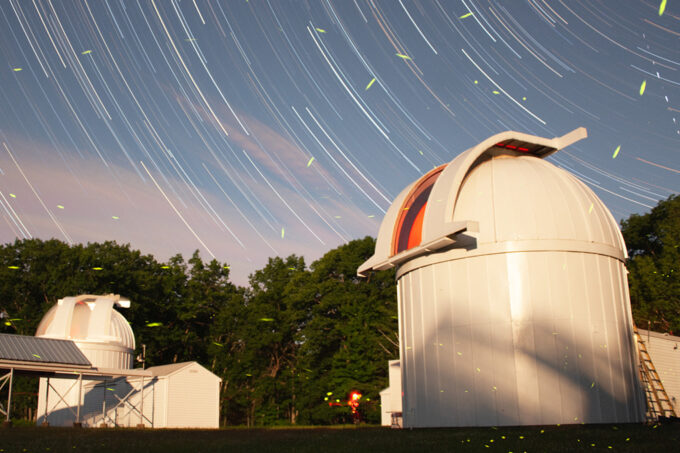
“There's a lot of science you can do with more modest telescopes if you have the time, and we specialize in these sorts of long-term surveys,” says Michael Person, director of MIT's George R. Wallace Jr. Astrophysical Observatory. Image credit: Orisvaldo Neto/MIT Wallace Astrophysical Observatory
The number of astronomy and astrophysics bachelor’s degrees granted in the US has been increasing since the mid-2000s, and University-run observatories serve an important role in providing students hands-on experience that contribute to science as a whole.
MIT’s Wallace Astrophysical Observatory was one of several college observatories highlighted in a feature piece in Liberal Education, the magazine of the American Association of Colleges and Universities (AACU). Michael Person, the observatory’s director, talks about the asteroid cataloguing work MIT undergraduates do, as well as the challenges posed by increasing light pollution to a field of science that has long since drawn people outside to look up.
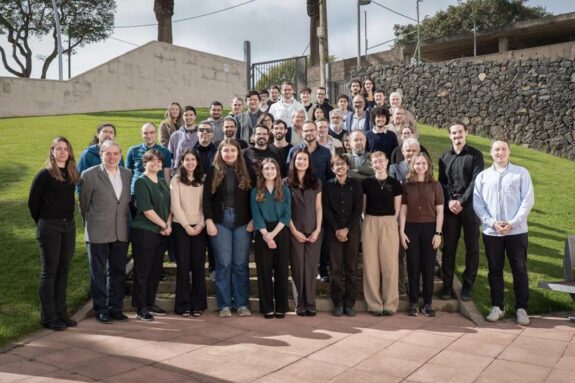
MIT holds fourth astronomy camp at the Teide Observatory
February 2, 2026